


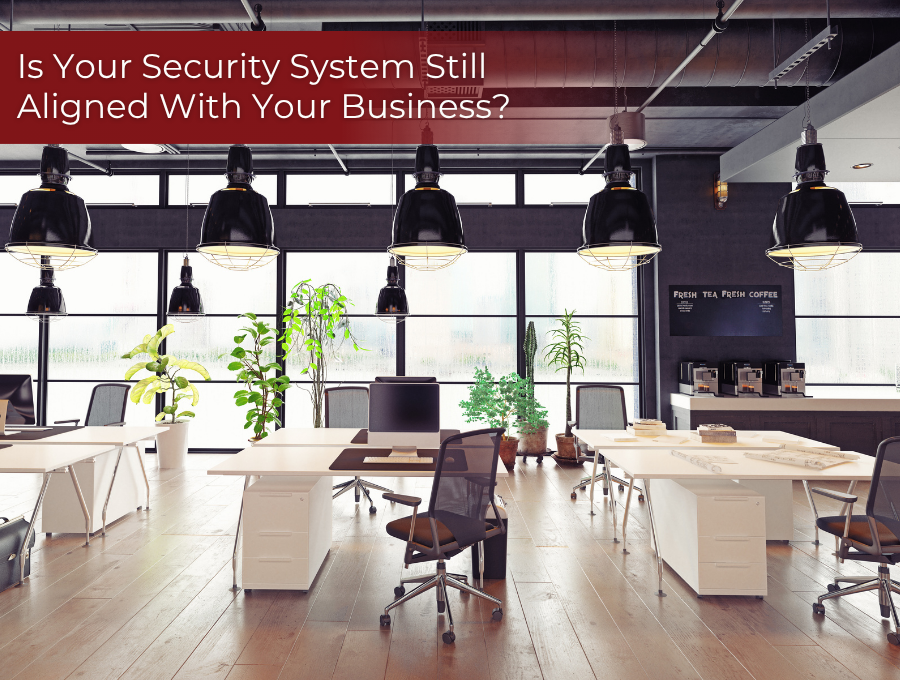
Security rarely becomes a priority for a business until something forces the conversation. A break-in, a false alarm that disrupts operations, or a compliance issue during an inspection can quickly reveal weaknesses that had been sitting quietly inside a system for years. In many cases, those weaknesses are not the result of poor planning. They develop gradually as the business itself evolves.
At Lane Electronics & Alarm Systems, we work with commercial organizations across Central Florida that installed security systems years ago and have relied on them ever since. The equipment often still functions properly. Cameras record activity, alarms arm and disarm, and access control manages doors as expected. What changes over time is the environment those systems were designed to protect.
Businesses expand into additional space, adjust operating hours, or bring on new staff and vendors who require access to different parts of the building. Even small layout changes can alter how people move through a facility. When those adjustments accumulate over time, a system that once matched the building perfectly may no longer reflect how the business actually operates.
Where Commercial Security Systems Often Fall Out of Alignment
Most of the issues that develop over time are not dramatic failures. Instead, they appear as operational mismatches that quietly reduce visibility or control.
A camera may still capture clear video, yet its view no longer covers the entrance that now receives the most traffic. Access permissions that were originally assigned to a small team may remain tied to employees who left long ago, while newer staff rely on temporary credentials that were never organized properly. Alarm zones continue to function correctly, but they may no longer correspond with how different parts of the building are used during evenings or weekends.
None of these situations indicate that the system was installed incorrectly. They simply reflect the pace at which most businesses change. A security system can continue operating exactly as designed while the facility it protects gradually moves in a different direction.
Security Infrastructure Works Best When Systems Are Integrated
Another challenge that many organizations encounter is fragmentation. Security infrastructure is often installed in stages over several years, with cameras, alarms, access control, and fire protection added at different times by different vendors. Each system may function on its own, yet they rarely communicate in a way that supports coordinated oversight.
When those systems operate independently, it becomes harder to interpret what is happening during an incident. Video may capture movement at an entrance while access control logs show a credential used at the same door, but if those systems are not aligned, the information remains scattered until someone manually reviews it afterward.
Modern commercial security infrastructure works best when those components function as a unified environment. When intrusion detection, video surveillance, access control, and monitoring platforms are integrated, each system reinforces the others. Events can be verified more quickly, activity becomes easier to document, and response procedures become far more consistent.
For organizations managing multiple properties or large facilities, that integration can also simplify oversight. Instead of monitoring several disconnected systems, operators gain a clearer view of activity across the entire property.
If you would like to discuss how your current security systems are working together today, call 407-299-6070 or connect with the team at Lane Electronics & Alarm Systems through the contact page to schedule a conversation.
Monitoring and Oversight Have Evolved
For many businesses, monitoring once meant waiting for an alarm signal and dispatching responders after a trigger occurred. While that model still plays an important role, modern monitoring capabilities now allow organizations to approach oversight more proactively.
Today’s monitoring platforms can incorporate event verification, structured escalation procedures, and remote oversight tools that help security teams review alerts as they happen. Instead of discovering incidents only after they occur, operators can evaluate activity in real time and determine whether intervention is necessary.
This approach reduces unnecessary dispatches while improving response when a genuine threat is identified. It also produces clearer documentation of what occurred and how it was handled, which can be valuable for compliance records, insurance requirements, and operational accountability.
For facilities that store valuable inventory or operate overnight, that level of oversight can significantly improve how risk is managed.
Fire Protection and Life Safety Cannot Be Treated Separately
Security conversations often focus on intrusion detection and surveillance systems, yet fire protection plays an equally critical role in protecting a commercial facility. Fire alarm systems must be inspected and maintained in accordance with NFPA standards, and they must communicate reliably with monitoring centers to ensure that emergency responders are notified quickly.
When fire protection is handled by a separate vendor from the rest of the security infrastructure, coordination becomes more complicated. Service schedules, inspection documentation, and monitoring procedures can operate independently, leaving facility managers responsible for keeping everything aligned.
Working with a single integrator that understands both security and fire protection simplifies that process. It allows service schedules to remain coordinated and ensures that each system supports the broader protection strategy within the building.
Why Experience Matters in Commercial Security
Commercial environments vary widely. A healthcare facility operates under different constraints than a warehouse, and a multi-tenant office building presents different access challenges than a manufacturing plant. Designing security infrastructure that supports those environments requires both technical knowledge and a clear understanding of how businesses operate day to day.
Lane Electronics & Alarm Systems has spent decades working with organizations throughout Central Florida to design and maintain integrated security systems that reflect those operational realities. By bringing intrusion detection, video surveillance, access control, monitoring, and fire alarm systems together under a coordinated strategy, businesses gain protection that supports their operations rather than complicating them.
Technology will continue evolving, and businesses will continue adapting their facilities to new demands. A reliable security partner ensures that the systems protecting those environments evolve as well.
A Practical Starting Point for Commercial Facilities
Businesses rarely need to replace their entire security infrastructure at once. In many cases, meaningful improvements begin with understanding how the current system is configured and whether it still aligns with how the facility operates today.
That conversation often leads to practical refinements, stronger integration between systems, or monitoring improvements that increase visibility without disrupting daily operations.
If you would like to talk through how your current security infrastructure supports your facility, call 407-299-6070 or reach out through the contact page to connect with the team at Lane Electronics & Alarm Systems.
—
Lane Electronics & Alarm Systems
Your Connection to Protection

Leave a Reply